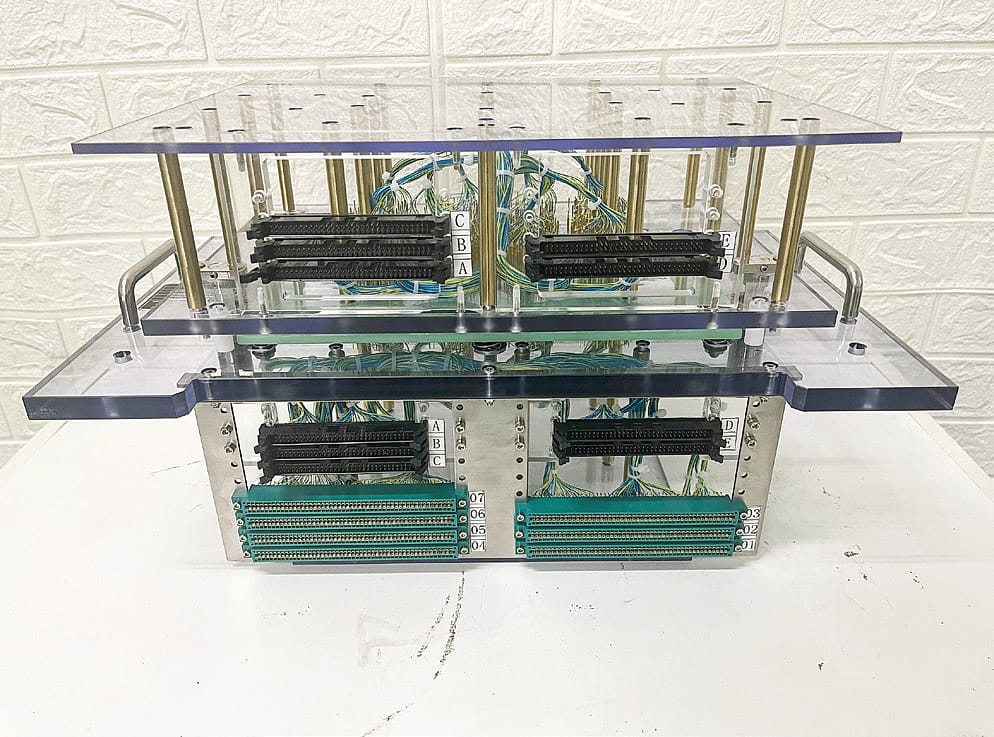
A test jig is more than a fixture. The board contact, the probing, the software that runs the sequence and the way it fits your line all decide whether testing keeps up with production. This guide walks through what to decide before you commission a custom ICT or FCT jig — and what to hand the people who build it.
Start with the test, not the fixture
The first question isn't mechanical — it's what you're verifying. ICT (in-circuit test) checks components and solder joints on the populated board; FCT (functional test) powers it up and checks behaviour. The two call for different contact strategies, so settle the test plan first. Many lines run both — see our ICT vs FCT guide for the difference.
In-line or manual?
In-line jigs sit on the conveyor and are loaded automatically — right for high volume and tight takt, where the fixture is part of an automated handling flow. Manual jigs are operator-loaded — right for lower volume, mixed products or bench testing, at lower cost and faster changeover. Pick by your volume, takt time and how automated the line is.
Contact and probing
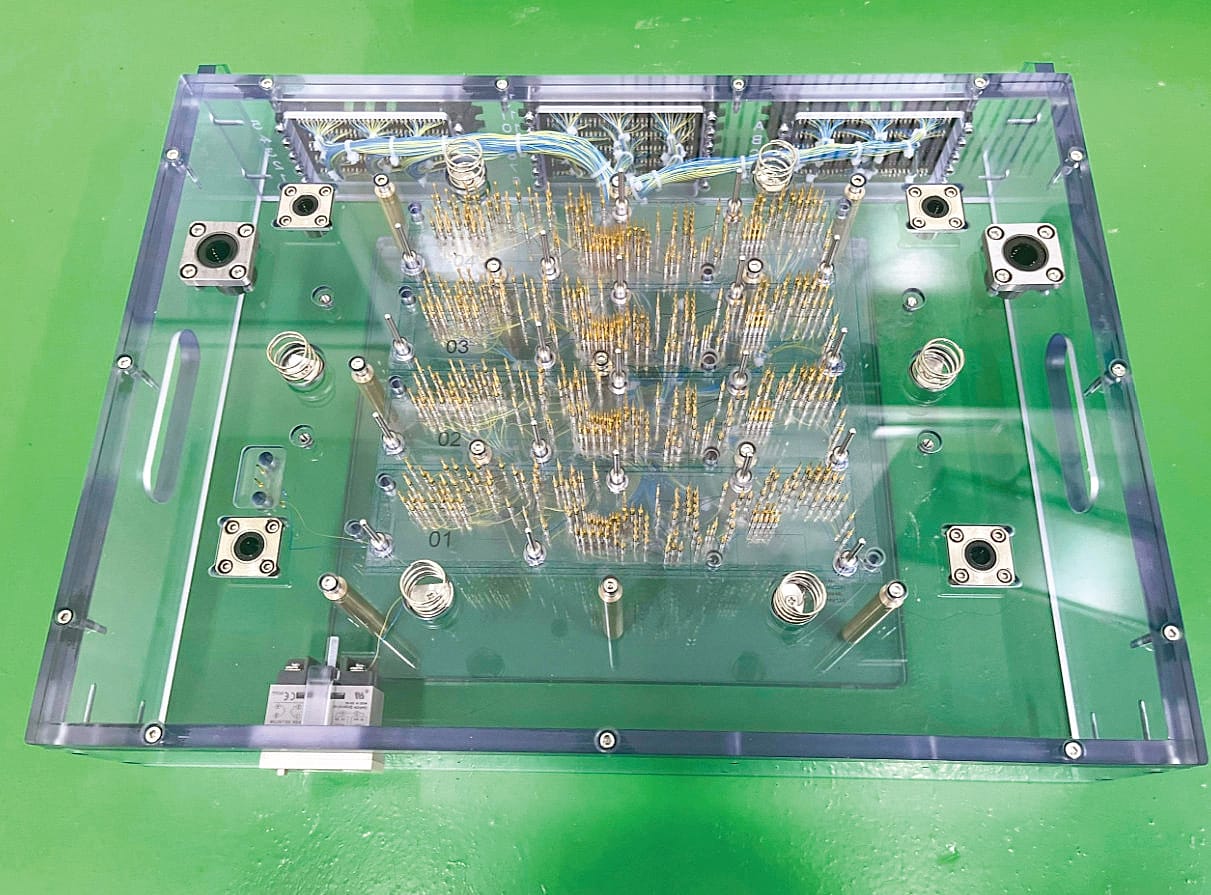
Most ICT and many FCT jigs use a bed-of-nails: spring-loaded pogo pins land on test points to make contact. Plan for guide pins and tooling so the board locates the same way every cycle, and even actuation (pneumatic or vacuum) so every probe seats with the right force. Test-point access is a board decision as much as a fixture one — design for testability with your PCB team early, and balance probe coverage against the space available on the board.
The software is half the jig
A fixture only takes the measurement; the software sequences the test, logs the data and gates pass/fail. Specify custom test software written to your line's standard, measurement logging (CSV/TSV) and MES integration up front, not as an afterthought. See how our platform does this in Deep Logic + V-Chassis and our ICT/FCT software service.
Your spec checklist
Hand your jig builder as much of this as you can — it shortens design time and avoids surprises:
- Board data — Gerber, BOM and netlist, plus test-point coordinates.
- Test plan — ICT, FCT or both, and the measurements needed per net or function.
- Throughput — target takt time and daily volume.
- Interfaces — connectors, edge connectors and comms/programming ports (RS232/RS485, USB…).
- Data & traceability — what to log and which MES or quality system to feed.
- Environment & safety — line layout, ESD, operator safety and any standards to meet.
How VILOOK TECH builds it
VILOOK TECH designs the fixture, configures the measurement cards and writes the test software in-house, then supports it on your floor. Explore our ICT/FCT test jigs, or send a project brief with your board and line spec and we'll scope it with you.